Learning how to clean teeth properly is the foundation of every perfect smile — more important than any whitening kit. Plaque, tartar, and surface stains build up when technique is wrong, even if you brush twice a day. This guide covers the dentist-recommended method from brush angle to flossing order.
The Proper Brushing Technique (Bass Method)
Most people brush side-to-side across the biting surface only. The modified Bass technique cleans where plaque actually hides — at the gum line:
- Hold your brush at a 45-degree angle toward the gum line
- Use short, gentle vibrations (not sawing motions) for 5–10 seconds per tooth section
- Brush outer surfaces, inner surfaces, then chewing surfaces
- Spend 2 full minutes — use a timer or electric brush with a built-in pacer
- Replace your brush every 3 months or after illness
Choosing the Right Tools
- Soft-bristle brush — medium and hard bristles wear enamel and cause gum recession
- Fluoride toothpaste — 1,450 ppm fluoride strengthens enamel against acid attacks
- Electric brush (optional) — oscillating-rotating brushes remove more plaque in studies; not required if technique is correct
- Interdental cleaners — floss, water flosser, or interdental brushes for between-teeth plaque
Flossing: The Step Most People Skip
Brushing cleans only 60% of tooth surfaces. Floss reaches the other 40%:
- Use 18 inches of floss — wind most around middle fingers, leaving 2 inches between
- Curve floss in a C-shape around each tooth, sliding below the gum line gently
- Use a clean section between each tooth
- Floss before brushing — dislodged plaque gets brushed away
If flossing causes bleeding, continue gently for 1–2 weeks — healthy gums stop bleeding. Persistent bleeding signals gum disease; see a dentist.
Tongue Cleaning
Bacteria on the tongue cause bad breath and can redeposit on teeth within hours. Scrape or brush your tongue from back to front every morning. A dedicated tongue scraper removes more bacteria than a brush alone.
Timing Matters
- Morning: Brush after breakfast OR before — both work if you rinse after acidic breakfast foods
- Evening: Brush and floss before bed — saliva production drops during sleep, letting bacteria multiply
- After acidic foods/drinks: Wait 30–60 minutes before brushing — acid softens enamel temporarily. Read our full explanation: why not to brush right after eating
The 5-Minute Daily Routine
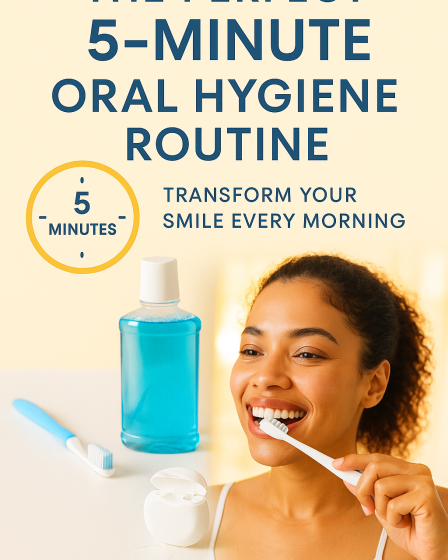
Short on time? Our 5-minute oral hygiene routine packs everything into one efficient sequence: rinse, floss, brush, tongue scrape, fluoride rinse.
Boosting Cleanliness for a Whiter Smile
Proper cleaning removes surface stains before they set. For deeper whitening after your routine is solid:
Professional Cleaning vs. Home Care
Even perfect home care cannot remove tartar (calcified plaque). Schedule a professional cleaning every 6 months. Your hygienist polishes stains that no toothbrush reaches — the single fastest way to brighten your smile without chemicals.